animal kingdom / home / HOMESCHOOLING

really?

what?

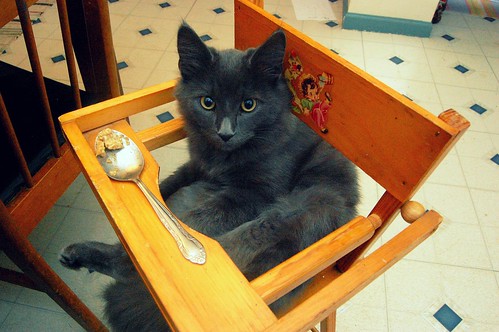
What? Your daughter's cat doesn't sit in a doll high chair and eat cold, gloppy oatmeal off a spoon? Really?

This is Mouse, the cat. He's been around this blog a number of times. Mary's morning routine involves coming down to the kitchen, saying good morning to me, and heading straight outside to find Mouse. She then brings him inside and snuggles him on the sofa or in bed, until I force her to finally come for breakfast.

This morning, she forgot to go to the bathroom before bringing him, so she slid the doll high chair next to me at the kitchen table, plopped him in, arranged his little paws, gave him a spoonful of oatmeal and left me to babysit. He sat there, happily, for quite a long time. 

her list

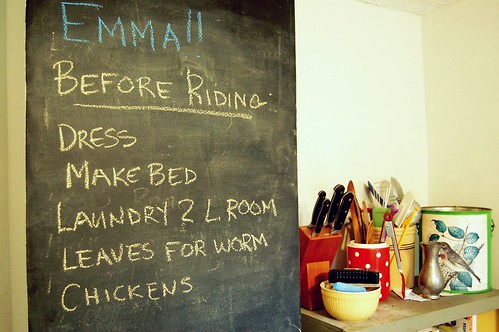
This morning, we're heading out to the barn so Emma can have a ride. She has quite a little list to tackle before she does–including feeding the GIANT hornworm that came inside on Dan's pant leg last night, after he'd been ripping out tomato plants. This thing can eat through tomato plant leaves like nobody's business. It is sick and fascinating, all in the same breath.

And we've started our homeschooling year–which is another post I've been meaning to write. If you haven't read Stefani's series on homeschooling, it is worth your time. I think it is always helpful to read other people's approach, even if it is different from your own. There is always something valuable in hearing how other people do it. 

I've got some posts swirling around in my head but with school starting, I've had a hard time finding the time. I think I'm going to have to become a bedtime blogger–which means you'll either hear a mumbo-jumbo of incoherent thoughts from me, or some overly-philosophical take on life. I tend to get very dramatic and poetic at night…..

More soon. Happy Wednesday. (already?!!)

what?

What? Your daughter's cat doesn't sit in a doll high chair and eat cold, gloppy oatmeal off a spoon? Really?

This is Mouse, the cat. He's been around this blog a number of times. Mary's morning routine involves coming down to the kitchen, saying good morning to me, and heading straight outside to find Mouse. She then brings him inside and snuggles him on the sofa or in bed, until I force her to finally come for breakfast.

This morning, she forgot to go to the bathroom before bringing him, so she slid the doll high chair next to me at the kitchen table, plopped him in, arranged his little paws, gave him a spoonful of oatmeal and left me to babysit. He sat there, happily, for quite a long time. 

her list

This morning, we're heading out to the barn so Emma can have a ride. She has quite a little list to tackle before she does–including feeding the GIANT hornworm that came inside on Dan's pant leg last night, after he'd been ripping out tomato plants. This thing can eat through tomato plant leaves like nobody's business. It is sick and fascinating, all in the same breath.

And we've started our homeschooling year–which is another post I've been meaning to write. If you haven't read Stefani's series on homeschooling, it is worth your time. I think it is always helpful to read other people's approach, even if it is different from your own. There is always something valuable in hearing how other people do it. 

I've got some posts swirling around in my head but with school starting, I've had a hard time finding the time. I think I'm going to have to become a bedtime blogger–which means you'll either hear a mumbo-jumbo of incoherent thoughts from me, or some overly-philosophical take on life. I tend to get very dramatic and poetic at night…..

More soon. Happy Wednesday. (already?!!)

children and nature / home / LIVING WELL / out and about

10 Ways To Get Outside–Even After School Starts

Logo_small

My friend Anne, from National Wildlife's Green Hour blog, asked if I would share these ten tips with all of you–on finding time to get outside with our children, even once the craziness of the school year starts. It is something that I believe is vital and important, so of course, I was happy to share them here. You can find the tips in their original location here on the Green Hour Blogwith live links, a few aren't working for me. Typepad is fussy.

And I would love to hear (and I'm sure Anne would too) the ways that you make time to get outside with your children, even once life gets busy. What are you favorite activities? Do you make time for a walk after dinner each night? Do you send them on a scavenger hunt? I'm sure we all have great ideas worth sharing.  It is amazing how easily children become engaged in the outside, natural world.

: BE OUT THERE : from NWF's Green Hour Blog :

Homework, soccer practice, ballet – is there time in the schedule to
play outside? Here are some tips to get a Green Hour — or at least
part of an hour – during a busy day:

1. Scenario: Traffic made you late, there's no time to cook
dinner, so you drive the family over to the rotisserie chicken place to
get a quick meal.

Tip: Keep a picnic blanket in your car for an impromptu picnic on any spot of grass you can find!

2. Scenario: Backpack? Check. Lunch? Check. You're ready to head to school.

Tip: Whether you drive or walk to school, or wait
with your child by the bus-stop, take a moment to notice nature. Make
it a game of "I Spy" — or download this nature scavenger hunt at greenhour.org/hunt.

3. Scenario: Your child is studying plants at school and, at
the dinner table, recites how photosynthesis works. You, yourself, have
never successfully kept a plant alive.

Tip: Start small: All you need is some bird-seed and a sponge. For sponge-garden instructions, visit greenhour.org/spongegarden. Next step: check out National Gardening Association’s parents’ primer for gardening with kids at kidsgardening.com/primer.asp.

3. Scenario: You and your youngest wait outside your older child's school, a few minutes before the bell rings.

Tip: Look up at the sky together. "Wait, mom — is
that a sheep or a donkey?" Picking out shapes in the clouds is a
classic childhood activity — and needs no special equipment.

4. Scenario: Your child looks at you and says, "Mom — I'm a little old for cloud-watching!"

Tip: For older kids, combine technology with the
outdoors and go geo-caching or, the lower-tech version, letterboxing.
There are about 20,000 letterboxes and 250,000 geocaches hidden in
North America. Visit geocaching.com and letterboxing.org.

5. Scenario: The kids get home from school and immediately
plop in front of the TV. You suggest going outside. They respond,
"Indoors is more fun!"

Tip #1: Set time-limits for TV watching and video
game playing. It won't be popular, so make sure you have a back-up
plan. If you have a backyard, kid-customize it with a homemade fort,
dart boards, a trampoline, a craft table. Set up a bird house to keep
wildlife visiting.

Tip #2: No backyard? Find your local parks using nwf.org/naturefind.
For older kids, start stretching your child's boundaries, allowing them
to go for unsupervised walks in the neighborhood with groups of
friends. They'll love the feeling of independence.

6. Scenario: Outside, it’s a perfect fall day, but you look
at your child’s homework assignments and realize outside play-time
isn’t a reality.

Tip: Take homework outside! There’s no reason math
problems can’t be done in the fresh air. Set up a clean outdoor
workspace for your child on a patio table, perhaps.

7. Scenario: Your daughter comes home from school clutching
new-found treasures: three crumbly leaves, two acorns and a
dirt-encrusted rock.

Tip: Instead of putting them on the kitchen
counter, a drawer, or — gasp — the trash, start a nature table. Set a
limit of how many items they can have in the "nature museum" — so
they'll keep it to a manageable number. Other ideas: use an old tackle
or sewing box, or a hanging shoe-organizer with clear plastic pockets.
Have your kids decorate it!

9. Scenario: A blank piece of paper in front of her, your daughter asks you, "What should I draw?"

Tip: Have your child make a map of your
neighborhood — using only natural landmarks. This will heighten his or
her observation skills and can be the first step in creating a "field
guide" to the nature in your neighborhood.

10. Scenario: It's 8 p.m. Dinner's over, but not quite time for bed.

Tip: Keep flashlights near the door, and go for a
neighborhood night hike. Kids will love the novelty — and you can
challenge them to identify "night sounds." Learn how to make a moon
journal at greenhour.org/moonjournal.

Anne Keisman is Be Out There Editor for the National Wildlife Federation. Follow her on Twitter: @GreenHour.

Logo_small

My friend Anne, from National Wildlife's Green Hour blog, asked if I would share these ten tips with all of you–on finding time to get outside with our children, even once the craziness of the school year starts. It is something that I believe is vital and important, so of course, I was happy to share them here. You can find the tips in their original location here on the Green Hour Blogwith live links, a few aren't working for me. Typepad is fussy.

And I would love to hear (and I'm sure Anne would too) the ways that you make time to get outside with your children, even once life gets busy. What are you favorite activities? Do you make time for a walk after dinner each night? Do you send them on a scavenger hunt? I'm sure we all have great ideas worth sharing.  It is amazing how easily children become engaged in the outside, natural world.

: BE OUT THERE : from NWF's Green Hour Blog :

Homework, soccer practice, ballet – is there time in the schedule to
play outside? Here are some tips to get a Green Hour — or at least
part of an hour – during a busy day:

1. Scenario: Traffic made you late, there's no time to cook
dinner, so you drive the family over to the rotisserie chicken place to
get a quick meal.

Tip: Keep a picnic blanket in your car for an impromptu picnic on any spot of grass you can find!

2. Scenario: Backpack? Check. Lunch? Check. You're ready to head to school.

Tip: Whether you drive or walk to school, or wait
with your child by the bus-stop, take a moment to notice nature. Make
it a game of "I Spy" — or download this nature scavenger hunt at greenhour.org/hunt.

3. Scenario: Your child is studying plants at school and, at
the dinner table, recites how photosynthesis works. You, yourself, have
never successfully kept a plant alive.

Tip: Start small: All you need is some bird-seed and a sponge. For sponge-garden instructions, visit greenhour.org/spongegarden. Next step: check out National Gardening Association’s parents’ primer for gardening with kids at kidsgardening.com/primer.asp.

3. Scenario: You and your youngest wait outside your older child's school, a few minutes before the bell rings.

Tip: Look up at the sky together. "Wait, mom — is
that a sheep or a donkey?" Picking out shapes in the clouds is a
classic childhood activity — and needs no special equipment.

4. Scenario: Your child looks at you and says, "Mom — I'm a little old for cloud-watching!"

Tip: For older kids, combine technology with the
outdoors and go geo-caching or, the lower-tech version, letterboxing.
There are about 20,000 letterboxes and 250,000 geocaches hidden in
North America. Visit geocaching.com and letterboxing.org.

5. Scenario: The kids get home from school and immediately
plop in front of the TV. You suggest going outside. They respond,
"Indoors is more fun!"

Tip #1: Set time-limits for TV watching and video
game playing. It won't be popular, so make sure you have a back-up
plan. If you have a backyard, kid-customize it with a homemade fort,
dart boards, a trampoline, a craft table. Set up a bird house to keep
wildlife visiting.

Tip #2: No backyard? Find your local parks using nwf.org/naturefind.
For older kids, start stretching your child's boundaries, allowing them
to go for unsupervised walks in the neighborhood with groups of
friends. They'll love the feeling of independence.

6. Scenario: Outside, it’s a perfect fall day, but you look
at your child’s homework assignments and realize outside play-time
isn’t a reality.

Tip: Take homework outside! There’s no reason math
problems can’t be done in the fresh air. Set up a clean outdoor
workspace for your child on a patio table, perhaps.

7. Scenario: Your daughter comes home from school clutching
new-found treasures: three crumbly leaves, two acorns and a
dirt-encrusted rock.

Tip: Instead of putting them on the kitchen
counter, a drawer, or — gasp — the trash, start a nature table. Set a
limit of how many items they can have in the "nature museum" — so
they'll keep it to a manageable number. Other ideas: use an old tackle
or sewing box, or a hanging shoe-organizer with clear plastic pockets.
Have your kids decorate it!

9. Scenario: A blank piece of paper in front of her, your daughter asks you, "What should I draw?"

Tip: Have your child make a map of your
neighborhood — using only natural landmarks. This will heighten his or
her observation skills and can be the first step in creating a "field
guide" to the nature in your neighborhood.

10. Scenario: It's 8 p.m. Dinner's over, but not quite time for bed.

Tip: Keep flashlights near the door, and go for a
neighborhood night hike. Kids will love the novelty — and you can
challenge them to identify "night sounds." Learn how to make a moon
journal at greenhour.org/moonjournal.

Anne Keisman is Be Out There Editor for the National Wildlife Federation. Follow her on Twitter: @GreenHour.

animal kingdom / DAILY FARM LIFE / life on thomas run

Rooster Chronicles Pt.2 : Is this goodbye?

When I'd last said goodnight to Roosevelt, he was walking up the center line of Thomas Run in the pitch black night. There was nothing we could do. I'd given up hope of his survival through the night.

The next morning at six a.m., I wasn't' awakened by the morning
light, or a sleepy-headed child, but I greeted my morning to the sound of
a rooster crowing, right outside my bedroom window. Over and over
again, he crowed. And I listened as he made his way around the house.
Crowing. And crowing. I laid in bed and waited. Waited to hear the
sound of little feet and whining voices, awakened by Roosevelt's march
around the house. But by some supernatural act of God, they slept
through the whole escapade. Thank goodness for sound machines.

By this time, I was beginning to hint
to Dan that maybe the rooster wasn't meant to be part of our little
farm. That maybe he needed to go back home. We decided to give him a
few more nights and if he didn't start behaving, we'd send him back to
Mr. Adams.

The next evening, when we locked in the chickens,
Roosevelt was MIA. Nowhere to be found, not even in any of his usual,
though annoying roosting places.

There was nothing we could do. We called it a night.

That
morning, concerned that I was sleeping in way too long and wasting my
day, Roosevelt began his crowing at 5:15. And he obviously wanted me,
and the rest of the household to know that he'd made it through one
more night without the safety of the coop. So he began his crowing
campaign around the house. 

And then I sent that email. The rooster must go.
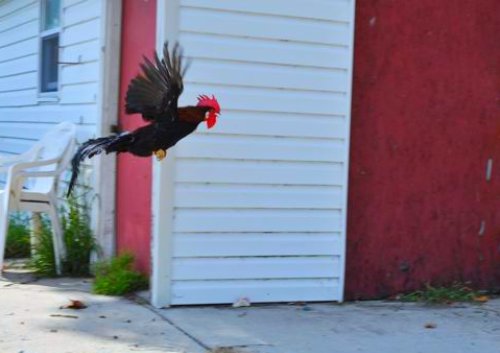
there he goes

The
next evening, was a repeat of the one before, but one thing differed.
Around 2a.m, I heard clucking and squawking outside my bedroom window.
I clutched my hands over my ears and elbowed Dan, who was still sound
asleep despite the ruckus.

"Dan!!! Roosevelt is getting eaten! Get out there and stop it! Please!!"

But
Dan, the man of few words (in the middle of the night) and lots of
common sense said something along the lines of, "It's too late now. If
I stop it mid-way through, then he's going to be hurt and I'm going to
have to put him out of his misery. There's nothing you can do about
it." 

I slowly inched my hands away from my ears and forced
myself to listen to Roosevelt's last clucks which now sounded like they
were coming from across the road. I hated to think it, but I figured a fox was dragging him away.

Then, I began to worry about the
ducks.

At the same moment, Dan realized that if it was indeed a
fox, he needed to get out there with his gun to prevent him from coming
back and making a smorgasbord out of the other chickens, the ducks or
even one of the cats.

I snuck downstairs to the dark kitchen
and watched Dan out the window as he sat quiet and still on the back
deck, gun loaded and aimed into the yard. The full moon cast long dark
shadows of silver and gray across the grass. It was a perfect night to
look for foxes.

Eventually I went back up to bed, hoping I
wouldn't hear any gun shots, but anxious to hear that all three ducks
were accounted for.

When he came back to bed, he told me that
the ducks were fine and that they'd probably be much smarter in the
morning. I had no idea what he meant, until he explained that he had
taken the kitchen radio and put it out on the deck by the ducks. It was
playing a radio station where a deep, soothing-voiced man read the
Bible through the wee hours of the night. Ironically, the radio would
most likely be our ducks salvation–the sound of a human's voice
keeping away any predators.

That morning, there was no crowing.

When my eyes opened and I realized it was past the normal crowing
hours, I then knew that Roosevelt had been eaten that night. We knew it
was inevitable. In this area, a chicken can only stay unprotected for
so long before it is discovered and gobbled up.

I felt a pang of
sadness for the way Roosevelt had to die, but I also felt like we'd
done everything we could. Our rooster interventions had failed. He didn't want our help.

And now, everything was back to normal. Just six little hens and three little ducks.

However,
Roosevelt still had more story to tell.

That afternoon, I was out running errands when my cell phone rang. It was Emma.

"MOM! YOU WILL NEVER BELIEVE THIS! The neighbors up the road just called and said our rooster is running around their farm!"

Apparently
Roosevelt didn't get eaten, and whatever frightened him off his roost
sent him dashing up the road, across cornfields, through the woods, to
a neighbor's farm. I even clocked the distance–it was at least half a mile.

That afternoon, Dan headed up to their
house with a chicken crate in the back of the farm truck to find
Roosevelt and bring him home. A few minutes later the girls and I
followed in case it would be necessary to round him up and corner him
somewhere on their farm.

But Roosevelt was nowhere to be found.

We left empty-handed. No rooster. No Roosevelt.

Either Roosevelt now belongs to the people and farms and homes of Thomas Run. Or he belongs to heaven.

And I suppose, that's the end of the story.

I'll
keep you posted. Though I wouldn't be surprised to hear a crowing
outside my window one of these mornings, when Roosevelt decides to make
his way back up Thomas Run to his first home. Or, for that matter, a yellow taxicab to stop at the end of the lane and drop him off.

Poor Roosevelt.

[photo by katie pertietwho's addicted to photographing my chickens]

When I'd last said goodnight to Roosevelt, he was walking up the center line of Thomas Run in the pitch black night. There was nothing we could do. I'd given up hope of his survival through the night.

The next morning at six a.m., I wasn't' awakened by the morning
light, or a sleepy-headed child, but I greeted my morning to the sound of
a rooster crowing, right outside my bedroom window. Over and over
again, he crowed. And I listened as he made his way around the house.
Crowing. And crowing. I laid in bed and waited. Waited to hear the
sound of little feet and whining voices, awakened by Roosevelt's march
around the house. But by some supernatural act of God, they slept
through the whole escapade. Thank goodness for sound machines.

By this time, I was beginning to hint
to Dan that maybe the rooster wasn't meant to be part of our little
farm. That maybe he needed to go back home. We decided to give him a
few more nights and if he didn't start behaving, we'd send him back to
Mr. Adams.

The next evening, when we locked in the chickens,
Roosevelt was MIA. Nowhere to be found, not even in any of his usual,
though annoying roosting places.

There was nothing we could do. We called it a night.

That
morning, concerned that I was sleeping in way too long and wasting my
day, Roosevelt began his crowing at 5:15. And he obviously wanted me,
and the rest of the household to know that he'd made it through one
more night without the safety of the coop. So he began his crowing
campaign around the house. 

And then I sent that email. The rooster must go.

there he goes

The
next evening, was a repeat of the one before, but one thing differed.
Around 2a.m, I heard clucking and squawking outside my bedroom window.
I clutched my hands over my ears and elbowed Dan, who was still sound
asleep despite the ruckus.

"Dan!!! Roosevelt is getting eaten! Get out there and stop it! Please!!"

But
Dan, the man of few words (in the middle of the night) and lots of
common sense said something along the lines of, "It's too late now. If
I stop it mid-way through, then he's going to be hurt and I'm going to
have to put him out of his misery. There's nothing you can do about
it." 

I slowly inched my hands away from my ears and forced
myself to listen to Roosevelt's last clucks which now sounded like they
were coming from across the road. I hated to think it, but I figured a fox was dragging him away.

Then, I began to worry about the
ducks.

At the same moment, Dan realized that if it was indeed a
fox, he needed to get out there with his gun to prevent him from coming
back and making a smorgasbord out of the other chickens, the ducks or
even one of the cats.

I snuck downstairs to the dark kitchen
and watched Dan out the window as he sat quiet and still on the back
deck, gun loaded and aimed into the yard. The full moon cast long dark
shadows of silver and gray across the grass. It was a perfect night to
look for foxes.

Eventually I went back up to bed, hoping I
wouldn't hear any gun shots, but anxious to hear that all three ducks
were accounted for.

When he came back to bed, he told me that
the ducks were fine and that they'd probably be much smarter in the
morning. I had no idea what he meant, until he explained that he had
taken the kitchen radio and put it out on the deck by the ducks. It was
playing a radio station where a deep, soothing-voiced man read the
Bible through the wee hours of the night. Ironically, the radio would
most likely be our ducks salvation–the sound of a human's voice
keeping away any predators.

That morning, there was no crowing.

When my eyes opened and I realized it was past the normal crowing
hours, I then knew that Roosevelt had been eaten that night. We knew it
was inevitable. In this area, a chicken can only stay unprotected for
so long before it is discovered and gobbled up.

I felt a pang of
sadness for the way Roosevelt had to die, but I also felt like we'd
done everything we could. Our rooster interventions had failed. He didn't want our help.

And now, everything was back to normal. Just six little hens and three little ducks.

However,
Roosevelt still had more story to tell.

That afternoon, I was out running errands when my cell phone rang. It was Emma.

"MOM! YOU WILL NEVER BELIEVE THIS! The neighbors up the road just called and said our rooster is running around their farm!"

Apparently
Roosevelt didn't get eaten, and whatever frightened him off his roost
sent him dashing up the road, across cornfields, through the woods, to
a neighbor's farm. I even clocked the distance–it was at least half a mile.

That afternoon, Dan headed up to their
house with a chicken crate in the back of the farm truck to find
Roosevelt and bring him home. A few minutes later the girls and I
followed in case it would be necessary to round him up and corner him
somewhere on their farm.

But Roosevelt was nowhere to be found.

We left empty-handed. No rooster. No Roosevelt.

Either Roosevelt now belongs to the people and farms and homes of Thomas Run. Or he belongs to heaven.

And I suppose, that's the end of the story.

I'll
keep you posted. Though I wouldn't be surprised to hear a crowing
outside my window one of these mornings, when Roosevelt decides to make
his way back up Thomas Run to his first home. Or, for that matter, a yellow taxicab to stop at the end of the lane and drop him off.

Poor Roosevelt.

[photo by katie pertietwho's addicted to photographing my chickens]